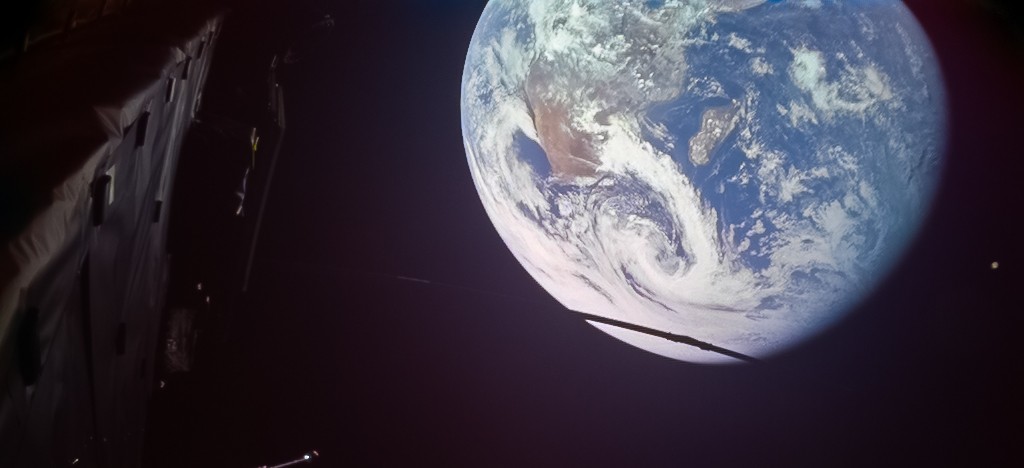
Sep 28, 2026 | Highlight, Space mission
Image of the Earth taken by one of MCSE’s monitoring cameras on board ESA’s JUICE mission to Jupiter, during its flyby of Earth on 28 September 2026. © ESA/Juice/JMC CC BY-SA 3.0 IGO Featured on ESA website...
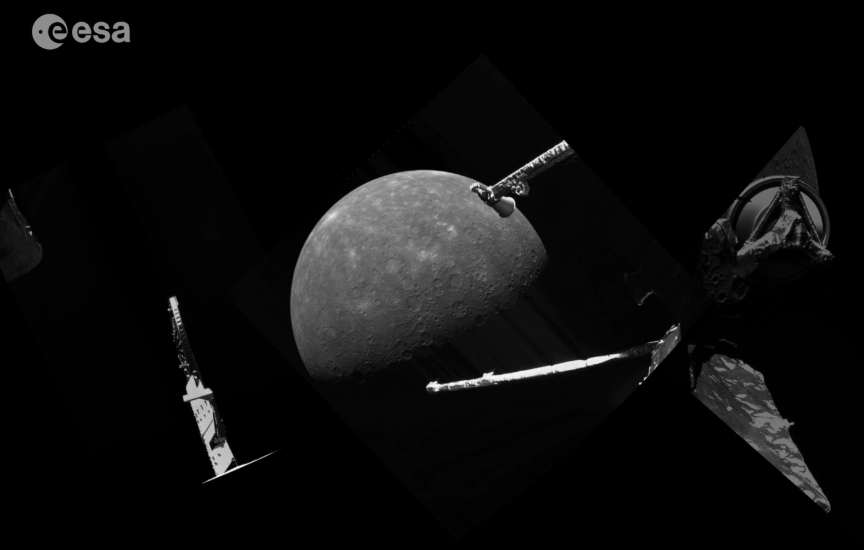
Sep 9, 2026 | Highlight, Space mission
Video of the interplanetary voyage of BepiColombo from its launch on 20 October 2018 to its arrival at Mercury on 3 September 2026 after 9.9 billion km cruise and nine ‘planetary flybys’. The images are taken by MCSE’s monitoring cameras. Featured on...
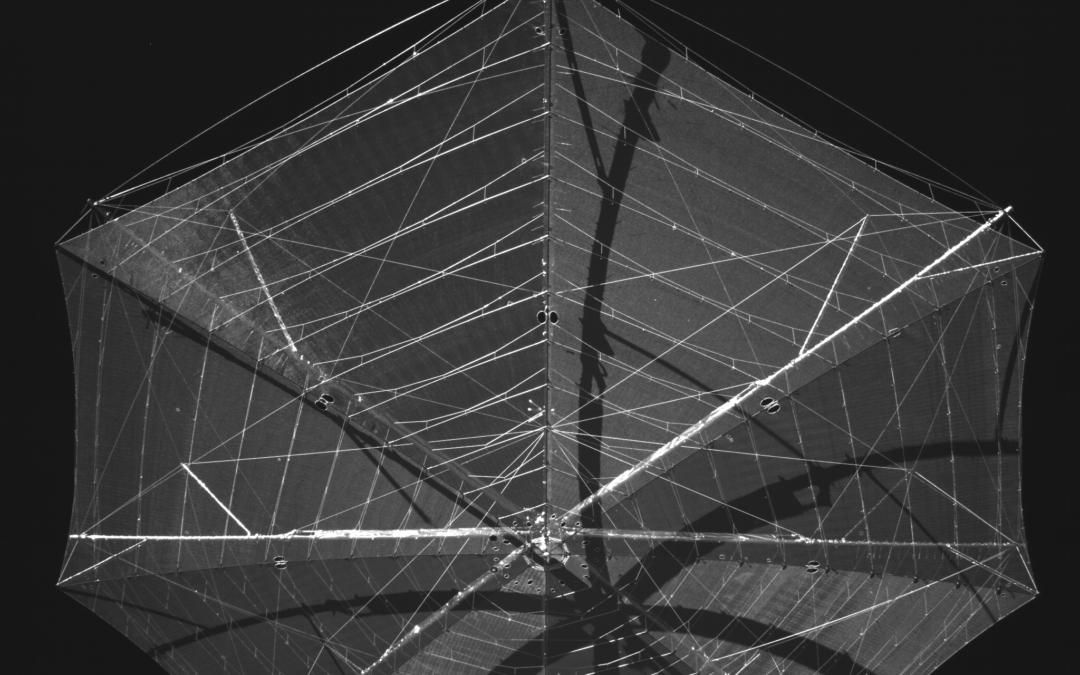
May 8, 2025 | Highlight, Space mission
This pictures, taken by MCSE’s camera installed on the Biomass satellite, shows the large reflector fully deployed. Credits: ESA Featured on ESA website...
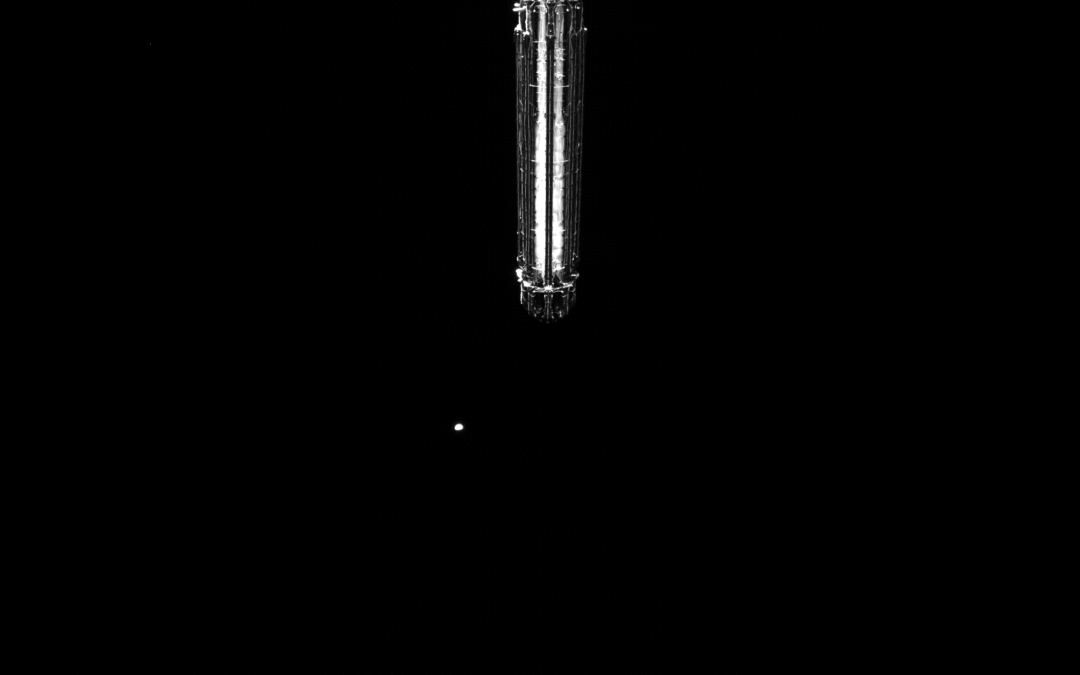
May 8, 2025 | Highlight, Space mission
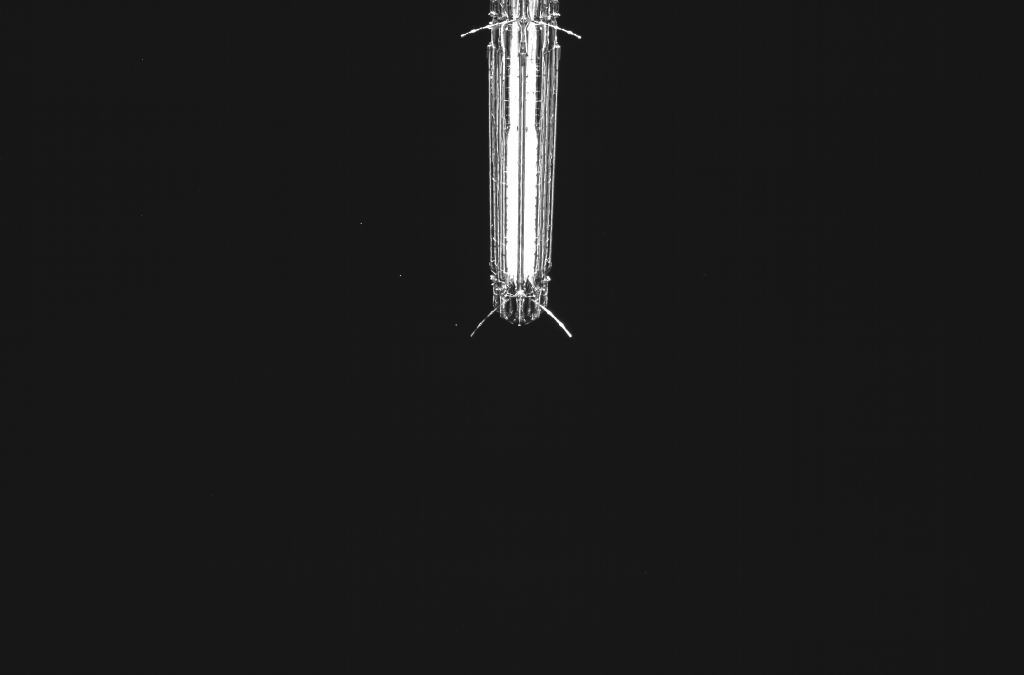
This short animation, taken by MCSE’s camera installed on the Biomass satellite, shows the large reflector in stowed position, and fully deployed. The Moon can be seen in the first image. Credits: ESA Featured on ESA website...
May 7, 2025 | Highlight, Space mission
This animated sequence, taken by MCSE’s camera installed on the Biomass satellite, shows the deployment of the satellite’s 12-metre-diameter antenna. Credits: ESA Featured on ESA website...
Jan 15, 2025 | Highlight, Space mission
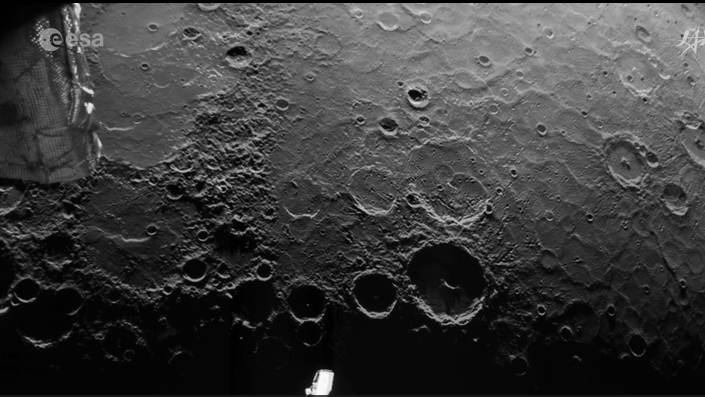
Video of the final planetary flyby of Mercury by the ESA/JAXA BepiColombo spacecraft until it enters orbit around the planet in late 2026. The images were taken on 7 and 8 January 2025 by MCSE’s monitoring cameras on board the spacecraft. Featured on ESA website...
Jan 10, 2025 | Highlight, Space mission
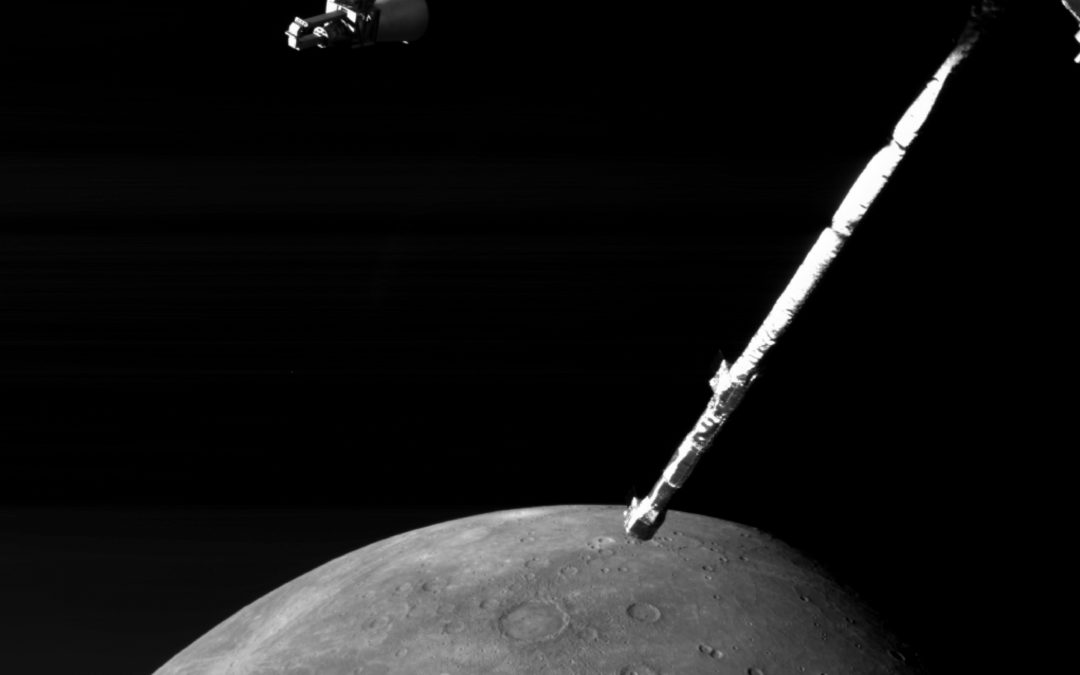
MCAM-2 took this photo at 07:17 CET, when the spacecraft was about 2103 km from the planet’s surface. The spacecraft’s closest approach of 295 km took place on the planet’s night side at 06:59 CET. The second image is annotated. Text and credits: ESA The bright...
Jan 10, 2025 | Highlight, Space mission
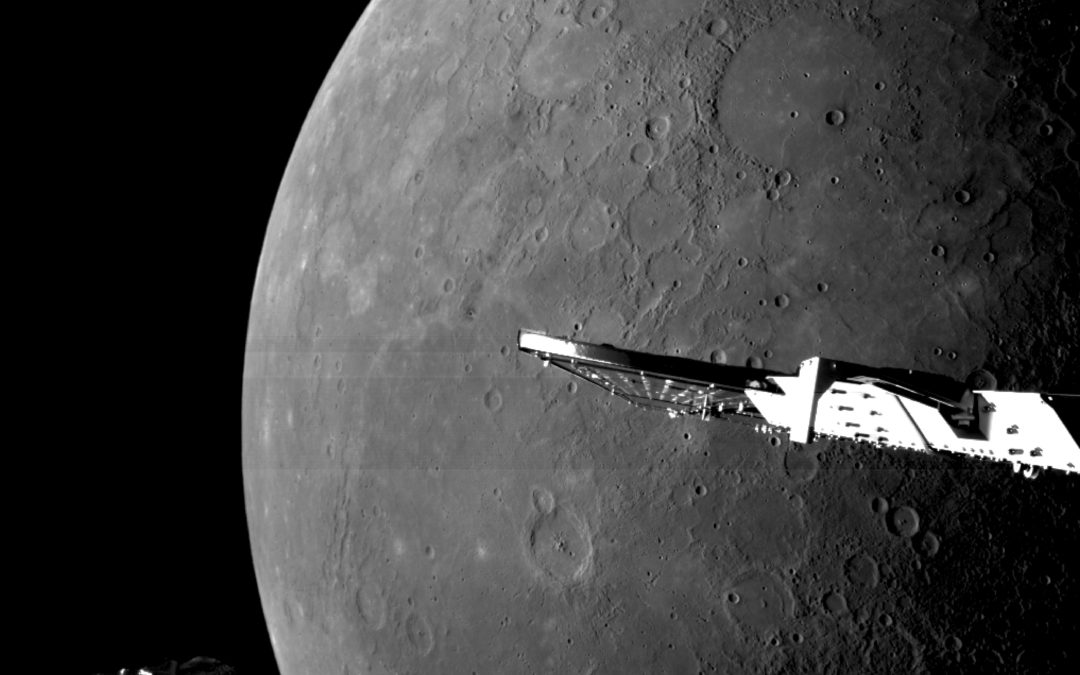
MCAM-1 took this photo at 07:12 CET, when the spacecraft was about 1427 km from the planet’s surface. The spacecraft’s closest approach of 295 km took place on the planet’s night side at 06:59 CET. The image shows that large regions of Mercury’s heavily...
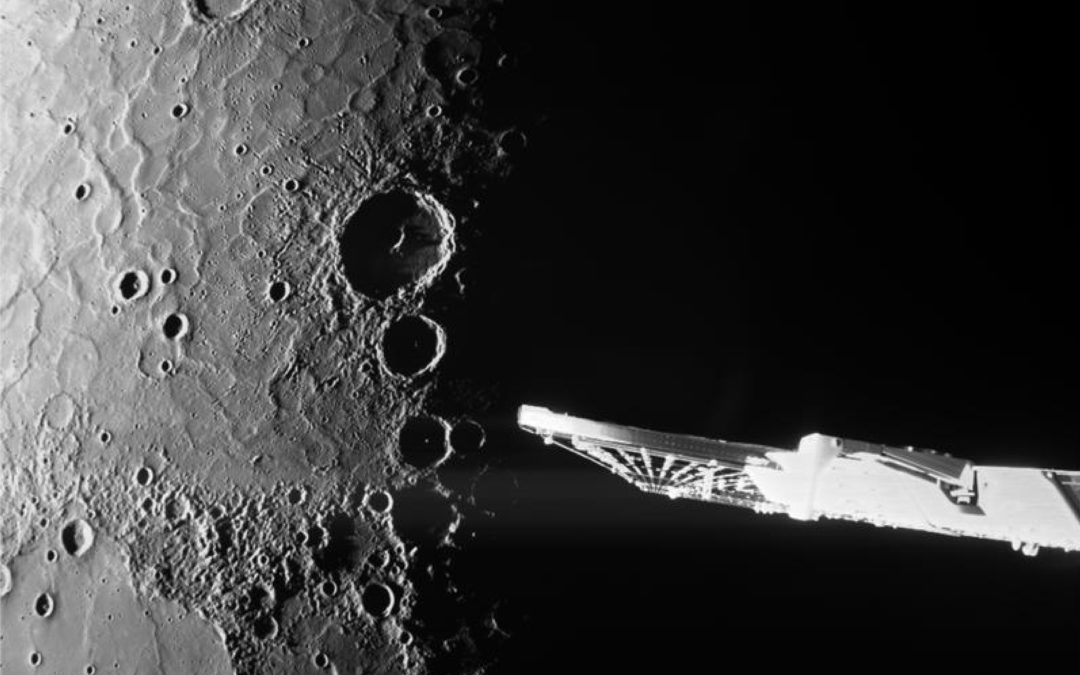
Jan 10, 2025 | Highlight, Space mission
M-CAM 1 took this long-exposure photograph of Mercury’s north pole at 07:07 CET, when the spacecraft was about 787 km from the planet’s surface. The spacecraft’s closest approach of 295 km took place on the planet’s night side at 06:59 CET. The second...
